
Views: 179 Author: LOONG FILTRATION Publish Time: 2026-02-18 Origin: Site
When procurement managers and plant engineers evaluate industrial filtration systems, they often encounter a deceptive visual similarity. Grade 304 and Grade 316L stainless steel look virtually identical to the naked eye. However, a significant price gap—typically 20% to 30%—forces a critical decision between budget optimization and operational risk. Choosing the cheaper alloy for a chloride-heavy application can lead to stress corrosion cracking (SCC), catastrophic leaks, and costly downtime. Conversely, specifying a premium alloy for benign applications wastes capital expenditure that could be better allocated elsewhere.
The stakes are high. A miscalculation in material selection does not just mean replacing a vessel; it involves safety compliance, batch contamination, and maintenance labor. This guide moves beyond basic chemistry to address operational realities. We will explore corrosion thresholds, sanitary surface requirements, and the Total Cost of Ownership (TCO) for industrial filtration. By understanding the nuances of a stainless steel filter housing, you can engineer for reliability without overspending.
The "Molybdenum" Factor: 316L’s 2–3% Molybdenum content provides the critical defense against pitting in chloride/saline environments (saltwater, bleach) where 304 fails.
The "L" Designation: "Low Carbon" (316L/304L) is non-negotiable for welded housings to prevent intergranular corrosion; standard 304/316 is often insufficient for pressure vessel welds.
ROI Reality: In corrosive environments, 316L extends equipment lifespan from ~5 years (304) to 20+ years, justifying the higher initial cost.
Surface Finish Matters: For sanitary applications (Pharma/F&B), the alloy grade matters less than the surface roughness (Ra) and electropolishing.
To make an informed decision, you must look past the generic "stainless" label. The performance differences between these alloys stem from microscopic alterations in their chemical recipes. While both grades rely on a passive chromium oxide layer to shield the iron from rust, the stability of this layer varies significantly under stress.
The corrosion resistance of any stainless steel comes from chromium. When exposed to oxygen, chromium forms a thin, invisible, and self-repairing oxide layer. Both 304 and 316L utilize this mechanism, but their foundational balance differs.
Grade 304, often called "18-8," contains approximately 18% chromium and 8% nickel. It serves as the global standard for general-purpose corrosion resistance. It performs excellently in oxidizing environments but remains vulnerable to reducing acids and saline solutions. Grade 316, the "upgrade" alloy, typically contains 16% chromium and 10% nickel. This higher nickel content does more than just increase the price; it stabilizes the austenitic structure of the metal, making it tougher and more ductile across wider temperature ranges.
The single most important differentiator between these two alloys is Molybdenum. Grade 316L includes a 2% to 3% addition of this element, which is entirely absent in 304. Molybdenum specifically targets the weaknesses of the chromium oxide layer.
In environments rich in chlorides—such as seawater, brine, or bleach—chloride ions can penetrate the passive layer of standard 304 steel. This creates "pitting," which are localized holes that burrow deep into the metal, and "crevice corrosion," which occurs in tight spaces like thread roots or under gasket seats. The addition of Molybdenum drastically reinforces the passive layer against this chemical attack. For industries managing salt water or industrial solvents, this element is the primary line of defense.
| Feature | 304 Stainless Steel | 316L Stainless Steel |
| Primary Composition | 18% Cr / 8% Ni | 16% Cr / 10% Ni / 2-3% Mo |
| Carbon Content | Max 0.08% | Max 0.03% (Low Carbon) |
| Key Defense | General Oxidation | Chlorides & Pitting |
| Typical PREN* | ~18-20 | ~24-25 |
*PREN (Pitting Resistance Equivalent Number) measures resistance to pitting corrosion. Higher is better.
You might see specifications for "316" versus "316L." In the context of filtration vessels, the "L" is not optional; it is essential. Filter housings are almost exclusively welded pressure vessels. During the welding process, standard stainless steel grades (with carbon content up to 0.08%) suffer from a phenomenon called carbide precipitation.
At high welding temperatures, carbon draws chromium out of the alloy to form chromium carbides. This depletes the chromium levels near the weld bead, creating a weak zone prone to intergranular corrosion. The "L" stands for Low Carbon (max 0.03%). By reducing the carbon available, L-grades prevent this precipitation. This ensures that the weld seam remains as corrosion-resistant as the rest of the housing body.
Buyers often get confused when they see codes like CF8 or CF8M on a technical drawing. It is important to clarify that filter housings are frequently manufactured using casting processes for the head and base. CF8 is simply the cast equivalent of 304 stainless steel, while CF8M is the cast equivalent of 316. If your specification sheet lists CF8M, you are receiving the chemical protection of 316, optimized for the casting mold process.
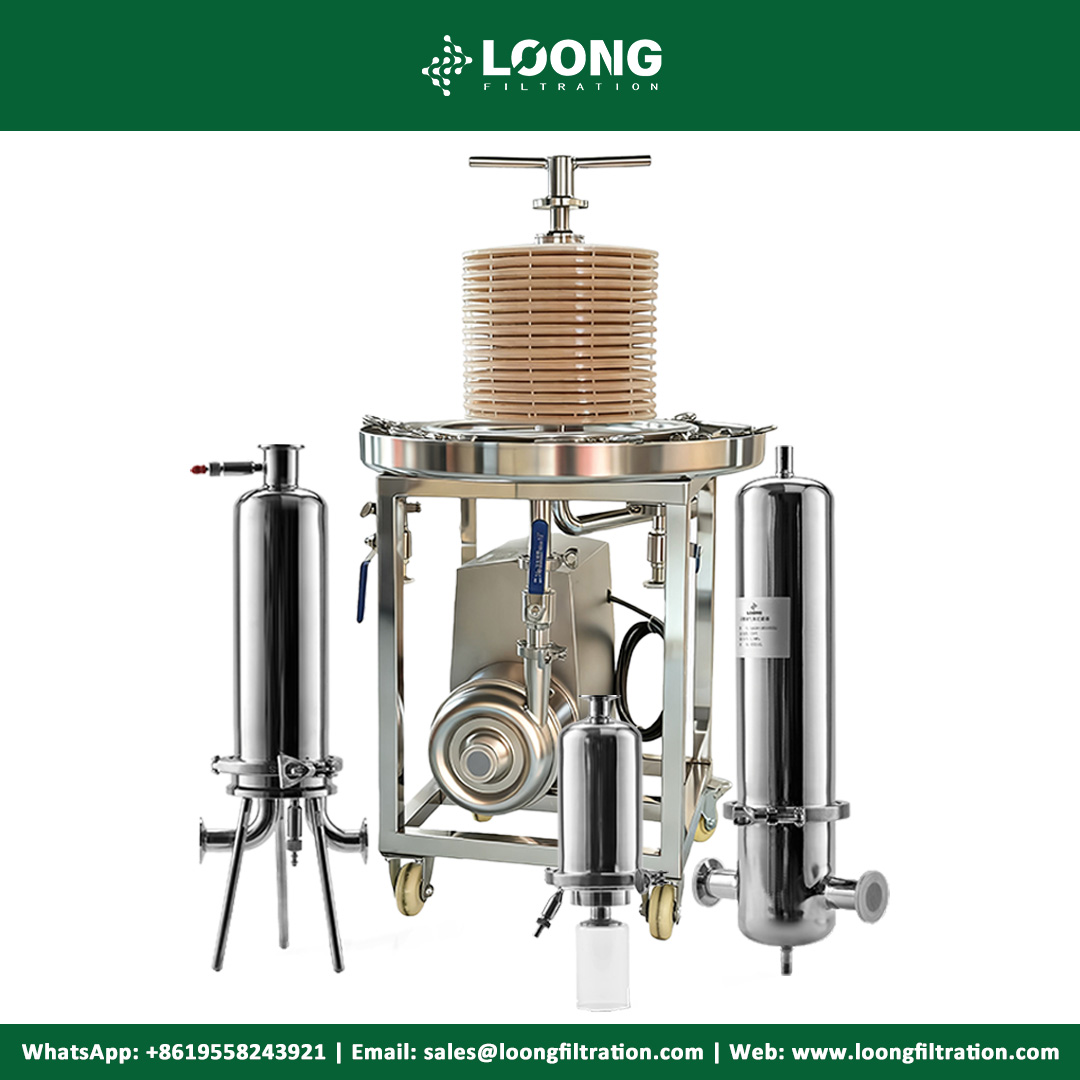
Engineers should not default to the most expensive material "just to be safe." Over-specification drains budgets that could be used for better filtration media or automation. The choice between 304 and 316L depends on the specific chemical profile of your fluid stream.
Grade 304 is the robust workhorse of the industry. It handles physical stress and high pressure just as well as 316L. You should confidently select 304 when the environment is controlled and non-aggressive.
Environment: Freshwater, potable municipal water, non-corrosive oils, solvents, and dry air filtration.
Industry: Painting and coating lines (non-acidic), general manufacturing cooling loops, and municipal water treatment.
Logic: If the chloride levels in your water are below 50 ppm and the pH remains neutral (between 6 and 8), 304 offers performance identical to 316L. There is no operational benefit to paying the premium in these scenarios.
Certain environments aggressively attack standard stainless steel. Here, the extra cost of 316L is mandatory to prevent rapid equipment failure.
Environment: Seawater (desalination), brine, high-chloride process water, and acids like sulfuric or phosphoric acid.
Industry: Marine operations, pharmaceutical processing, semiconductor manufacturing, and chemical processing.
Logic: The presence of chlorides creates micro-galvanic cells on the metal surface. 316L is the minimum standard for these applications. Using 304 here usually results in leaks appearing within months, caused by pitting that penetrates the housing wall from the inside out.
Both alloys perform exceptionally well under heat compared to plastics. Grade 304 maintains integrity up to approximately 870°C, while 316 performs up to roughly 925°C. However, in liquid filtration, the steel is rarely the limiting factor. The O-rings or gaskets (typically EPDM, Viton, or Silicone) will fail long before the steel loses strength. Therefore, temperature alone rarely dictates the switch from 304 to 316L; chemical compatibility remains the primary driver.
In industries like Food & Beverage and Pharmaceuticals, the definition of "quality" shifts from pure alloy composition to surface topography. A rough 316L surface is less hygienic than a highly polished 304 surface because bacteria and biofilms thrive in microscopic valleys.
For a standard SS liquid filter housing used in wastewater, a sandblasted or pickled finish is acceptable. The roughness (Ra) is secondary to structural strength. However, sanitary housings must prevent bacterial adhesion. If the surface is too rough, cleaning cycles cannot effectively remove contaminants trapped in the micro-crevices.
To ensure sterility, hygienic housings require a Mirror Polish with a roughness average (Ra) of ≤ 0.3μm to 0.4μm. This smoothness ensures that water flows without turbulence and that residues slide off during cleaning. When specifying for dairy or injectable drugs, checking the Ra value on the data sheet is just as important as checking the material grade.
High-purity systems, such as Water for Injection (WFI) or semiconductor processing, demand electropolishing. This electrochemical process removes a microscopic layer of surface material. It preferentially removes iron ions, leaving the surface rich in chromium. This results in a superior chromium/iron ratio, creating a passive layer that is thicker and more chemically resistant than the base metal. Furthermore, it creates a "non-stick" surface that significantly improves cleanability.
Sanitary housings frequently undergo Steam-in-Place (SIP) cycles, where temperatures spike to 121°C or higher to kill biological load. While 304 can handle the heat, 316L is preferred for these cyclical thermal shocks. It resists the aggressive expansion and contraction stress better over time, maintaining the integrity of the sanitary welds and preventing fatigue-induced micro-cracking.
Procurement decisions are often driven by the initial Capital Expenditure (CapEx). 316L housings typically cost 20–30% more upfront than their 304 counterparts. However, smart engineering looks at Operational Expenditure (OpEx) and risk mitigation.
The "hidden cost" of selecting 304 for a corrosive application dwarfs the initial savings. If a housing corrodes and leaks, the financial impact includes:
Process Fluid Contamination: Loss of an entire batch of expensive product (e.g., pharmaceutical ingredients or specialty chemicals).
Unscheduled Downtime: The cost of labor to replace the unit, plus the lost production revenue during the outage.
Safety Violations: Leaking acids or hazardous fluids can lead to regulatory fines and safety compliance issues.
Consider a facility located in a coastal industrial park, where the air carries salt.
304 Housing: In this harsh environment, external pitting can compromise structural integrity within 3 to 5 years.
316L Housing: In the same environment, 316L can remain operational for 15 to 20+ years.
The extended lifespan means you buy the equipment once rather than three or four times.
A simple financial rule of thumb: If the housing is installed outdoors (exposed to UV and salt air) or if the process fluid has variable chemistry (potential pH spikes), the insurance premium of 316L usually pays for itself in under two years. The reduced maintenance burden and peace of mind justify the initial investment.
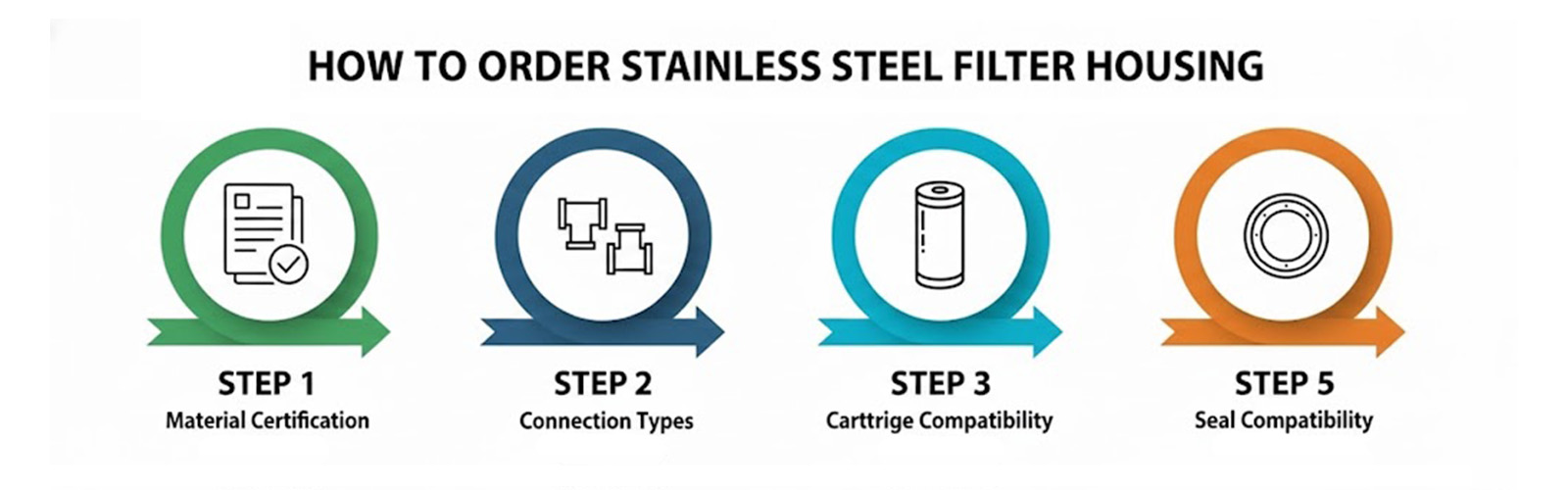
Once you have selected the correct alloy, you must ensure the manufacturer delivers exactly what you need. Vague purchase orders lead to incompatible equipment. Use this checklist to specify your filter housings correctly.
Never rely on a verbal guarantee. Always request Mill Test Reports (MTRs) for the heat of steel used in your housing. You need to verify the Nickel and Molybdenum percentages and ensure the Carbon content is below 0.03% for L-grade verification.
The interface with your piping system dictates the connection type.
NPT/BSP Threads: Common for low-pressure, smaller industrial 304 housings.
Flanges (ANSI/DIN): The standard for heavy-duty industrial 316L use, offering easier disassembly for maintenance.
Tri-Clamp (Sanitary): Mandatory for hygienic 316L applications to allow for quick disassembly and cleaning without tools.
Not all cartridges fit all housings. You must verify the seat cup design.
DOE (Double Open End): Uses a crush seal; common in general industrial 304 units.
SOE (Single Open End - 222/226): Uses O-rings for a positive seal. This is critical for high-purity 316L applications where bypass cannot be tolerated. Ensure you specify whether the closed end is "Fin" or "Flat."
A common failure mode is buying a high-grade 316L housing but using a standard Buna-N gasket in an acidic application. The steel survives, but the seal melts, causing a leak. Match the seal material (Viton, EPDM, PTFE/Teflon) to the chemical aggressiveness of the fluid, not just the steel grade.
The choice between 304 and 316L is rarely a matter of preference; it is a matter of chemistry and economics. Grade 304 serves as the cost-effective workhorse for freshwater and neutral fluids, delivering reliable performance where corrosion risks are low. Grade 316L is the mandatory shield against chlorides, acids, and sanitary risks, offering necessary longevity in harsh conditions.
Do not engineer your system for the "average" daily condition. Engineer it for the "worst-case" chemical spike or aggressive cleaning cycle the system might face. The slight premium for Molybdenum and low-carbon welding is insignificant compared to the cost of a single production stoppage. For precise sizing and material verification, always consult with a specialized stainless steel filter housing manufacturer to review MTRs and pressure ratings before finalizing your specification.
A: No. Chlorides in saltwater rapidly destroy the passive oxide layer of 304 stainless steel. This leads to pitting corrosion and eventual failure. You must use 316L stainless steel, or for highly saline or warm seawater, Super Duplex stainless steel is often required for long-term durability.
A: Cold working processes, such as bending or forming the head of the housing, can induce slight magnetism in austenitic steels like 304. This does not necessarily mean the steel is low quality or "fake." However, 316 stainless steel is generally non-magnetic even after processing.
A: They are chemically equivalent. 316 refers to the "wrought" grade (rolled or forged steel), while CF8M is the "cast" grade. Filter housings often have cast heads (CF8M) welded to wrought bowls (316L). Both offer the same corrosion resistance capabilities.
A: Yes, it is "stain-less," not "stain-proof." If 316L is exposed to free iron contamination during installation or is not properly passivated, it can corrode. Furthermore, if the chemical environment exceeds its pitting resistance capabilities, it will eventually rust.


