

The Ultimate Guide to Packaging Machines:
Streamlining Your Production Process

The best high flow filter is not simply the cartridge with the largest diameter or the highest published flow figure. It is the filter that meets peak plant demand while maintaining the required water quality, acceptable pressure drop, practical change-out intervals, and compatibility with the entire treatment train. In 2026, industrial water systems are being judged just as much by uptime, footprint, labor, and protection of downstream assets as by initial cartridge price. A disciplined selection process helps avoid oversized housings, repeated change-outs, and poor protection for RO, UF, EDI, process equipment, or final-use points.
Key Takeaways
Size high flow water filters for the highest credible operating demand, not only an average flow rate.
Evaluate contaminant load, particle character, and pressure-rise behavior alongside the stated micron rating.
A high flow filter cartridge can reduce element count and housing footprint, but only if the housing, flow distribution, and maintenance access are designed correctly.
Polypropylene is a common water-treatment medium; hot, solvent-bearing, or unusual process streams may require another construction.
Total cost should include cartridge life, labor, downtime, energy from pressure loss, waste handling, and protection of downstream equipment—not just the purchase price.
What Makes a High Flow Filter Different?
A high flow filter cartridge is generally a large-diameter, high-surface-area element designed to process much more liquid per cartridge than a conventional small-diameter cartridge. Pleated construction expands available media area, while the larger format can reduce the number of cartridges and housings needed for a given duty. The operational appeal is clear: fewer elements can mean fewer seals, fewer change-out actions, a smaller rack footprint, and less chance of an extended maintenance event.

Those benefits are not automatic. High flow does not mean unlimited flow at every micron rating or every solids load. A cartridge that runs well on clean utility water may foul early on a variable source water, produced water, or recycle stream. The selection must account for the actual fluid, solids profile, required outlet quality, and the pressure available across the filter train.
The LOONG FILTRATION high flow filter cartridge range uses a large-diameter pleated format. Its published configuration illustrates the kind of capacity advantage that makes high-flow architecture worth considering; the final duty should still be verified against the applicable product data and plant conditions.
Define the Water Duty Before Choosing a Cartridge
“Industrial water” is too broad to be a specification. The correct high flow water filter for a cooling loop make-up line may be very different from a cartridge protecting RO membranes, polishing reclaimed water, filtering seawater pretreatment, or guarding sensitive process equipment. Start by classifying the stream and the downstream risk.
Ask these questions:
What is the peak, normal, and minimum flow, and how rapidly can demand change?
What does the source water contain: sand, rust, scale, biological debris, corrosion products, precipitates, colloids, oil, or variable solids?
What must the filter protect: RO/UF membranes, EDI, nozzles, heat exchangers, meters, resins, or a final-use process?
What are the normal and maximum temperature, pH, pressure, and chemical additions?
Is the duty continuous, batch, seasonal, or subject to shock loads after storms, maintenance, or source switching?
How much space, lifting access, and shutdown time are available for a cartridge change?
These answers establish whether high-flow cartridges are the primary filtration stage, a polishing stage, or part of a layered train. They also prevent a familiar mistake: choosing a nominal micron rating without knowing what contaminant is actually causing downstream fouling.
Compare High-Flow Selection Criteria
Selection criterion | What to define | Why it changes the decision |
Peak flow | Highest sustained and short-duration demand | Determines the required number of cartridges and allowable pressure loss |
Solids burden | Concentration, particle size, compressibility, and variability | Governs dirt-holding capacity and real change-out interval |
Retention target | Required protection level at the downstream asset | Drives media grade and whether a nominal or more precise rating is needed |
Water chemistry | pH, oxidants, temperature, oils, solvents, and additives | Determines media, seals, housing materials, and cleaning limitations |
Differential pressure | Clean start, normal operating point, and maximum limit | Protects flow stability and makes replacement criteria objective |
System layout | Housing size, connections, bypass, vent/drain, access | Affects flow distribution, safety, and maintenance time |
Lifecycle economics | Labor, downtime, disposal, energy, and asset protection | Shows whether fewer high-capacity elements truly lower operating cost |

Use this table as a data-collection checklist. A supplier can make a more reliable recommendation when each field is supported by plant data rather than an assumed “standard” water quality.
Match the Filter to the Downstream Protection Goal

RO, UF, and EDI Pretreatment
In a membrane-based water train, the cartridge's job is usually to reduce particulate loading and prevent rapid fouling of the downstream unit. The goal is not necessarily to produce final-quality water at the cartridge stage; it is to deliver stable feed that lets the membrane system operate within its intended differential-pressure and quality window. A high capacity prefilter is valuable when the upstream load is large or variable, but the selected micron rating needs to match the downstream membrane supplier's requirement.
LOONG FILTRATION identifies its high flow pleated filter cartridge as a protective prefilter for RO, UF, and EDI systems, as well as desalination and power applications. That is a useful application fit to investigate when the goal is downstream asset protection. Confirm the exact element rating, flow, pressure, and water chemistry with the project's process basis.
General Process Water and Equipment Protection
For pumps, valves, spray nozzles, heat exchangers, and cooling equipment, define the smallest particle that creates a reliability problem. Filtering more finely than necessary can increase pressure loss and cartridge consumption; filtering too coarsely may allow abrasion, deposits, or fouling. The correct choice is therefore tied to actual failure mechanisms, maintenance history, and the sensitivity of the protected equipment.
Where source water varies, trend turbidity, particle counts, or differential-pressure rise across seasons and operating conditions. A high flow cartridge that performs well in clean months may require a preceding separator, media filter, or coarse stage during heavy solids events. Design the train for the less favorable but credible condition, not the most convenient sample.
High-Temperature or Chemically Demanding Water Streams
Not every water-related duty is ordinary ambient-temperature service. Produced water, hot condensate, chemical wash streams, or water mixed with solvent residues can exceed the practical envelope of a standard polypropylene configuration. Material selection must then be reviewed alongside the high-flow format.
For example, the ultra-heat resistant large flow filter cartridge uses a PBT construction for demanding high-temperature and solvent-related conditions. It should not be treated as a universal upgrade; its value is in a defined process where temperature and chemistry justify the specialized construction. LOONG FILTRATION can help compare the stream conditions against an appropriate media and seal package.
Size for Flow and Pressure Drop, Not Marketing Labels
The basic sizing question is straightforward:
Required cartridge capacity = peak system flow ÷ allowable flow per cartridge at the chosen grade and acceptable pressure drop.
The hard part is identifying the “allowable flow per cartridge” from representative data. It depends on media grade, liquid viscosity, temperature, contaminant loading, and the differential pressure the plant can accept. Do not use a maximum water flow listed for a coarse, clean-water test as the design flow for a fine, dirty-water duty.
Build a sizing worksheet with the following entries: peak flow, normal flow, clean pressure drop, maximum allowable differential pressure, expected solids concentration, expected filter life, cartridge dimensions, housing capacity, and required redundancy. If the process cannot tolerate an outage, consider a duplex or parallel arrangement that allows maintenance without interrupting the treated-water supply.
Also check velocity through the housing and distribution system. A large element does not correct poor inlet distribution. Uneven loading can make one region of the media blind early while other areas remain underused. Proper housing design, venting, and controlled startup are essential to achieve the capacity suggested by the cartridge format.
Choose a Micron Rating Based on the Actual Risk
Micron rating is one of the most visible cartridge specifications, but it is often used without context. Start with the downstream component's tolerance. RO membrane suppliers, sensitive nozzles, or fine resin beds may require a defined upstream protection level. General pump protection may tolerate a coarser stage. Then consider whether the cartridge rating is nominal or absolute and what retention evidence accompanies the product.
In variable water, a multi-stage strategy can be more resilient than one very fine cartridge. A coarse stage can remove larger debris and reduce the bulk loading. A high flow filter cartridge can then handle the secondary solids burden, and a final stage can address a critical protection point. This arrangement often delivers a more stable pressure-rise curve than asking a fine filter to capture every contaminant from the raw feed.
Be careful with language such as “removes everything above 5 microns.” Real retention depends on the media structure, particle shape, operating conditions, and test method. Specify the target risk and consult the product documentation rather than treating a single number as a universal performance guarantee.

Select Materials and Seals as a System
Polypropylene is widely used in industrial water filtration because it can be a practical fit for many aqueous streams. But water systems can contain oxidants, cleaning agents, extreme pH, high temperature, oil, or process additives that change the compatibility requirement. In addition to the media, review the core, end caps, cage, adapters, O-rings, and housing.
This is particularly important for reclaimed water, produced water, and industrial recycle streams. A cartridge may retain particles correctly but lose service life because a seal degrades or the media is exposed to an incompatible cleaning chemical. Ask for confirmation of the complete wetted construction and compare it with the full chemistry and temperature range. Include startup, shutdown, and cleaning conditions—not only steady-state operation.
For applications where the feed is not fully characterized, treat compatibility uncertainty as a design risk. Run a controlled trial and inspect post-run components. Monitoring pressure trend, flow, and filtrate quality during the test can reveal whether a material concern is actually limiting performance.
Evaluate Total Cost of Ownership
The purchase price of a cartridge is only one line in the cost equation. A useful lifecycle review considers how many elements are needed, how often they are changed, how much labor and shutdown time each change requires, the disposal volume, and the cost of pressure-related energy use. Most importantly, it should include the avoided cost of downstream membrane cleaning, equipment damage, unplanned outages, and loss of production.
A high flow configuration can improve the equation by reducing cartridge count and maintenance touches. However, a large element may be a poor economy if it is oversized for the actual load, if the housing creates uneven distribution, or if change-outs require difficult access. Compare complete system designs at the same treated-water requirement rather than comparing individual cartridge prices.

For every option, estimate the operating interval at normal and high solids load. Note whether replacement is driven by differential pressure, flow loss, or water-quality change. Establish a maximum allowable differential pressure from the downstream process and use it as a hard replacement trigger. Calendar replacement can be useful for planning, but it should not replace evidence from operating trends.
Plan Installation, Commissioning, and Monitoring
Correct commissioning protects both the cartridge and the data used to judge it. Verify the housing is clean, the seals are correctly lubricated with a compatible substance if required, and the cartridge is seated on the intended connection. Vent trapped air carefully, begin flow gradually, and record clean differential pressure at a known flow. That initial data point becomes the baseline for service-life trending.
Install pressure measurement on both sides of the housing where practical. Trend differential pressure alongside flow and source-water quality. If pressure rises rapidly after a source change, identify the upstream cause rather than simply replacing cartridges more frequently. A change in fouling pattern can signal a process upset, failing upstream separator, corrosion issue, or biological event.
Plan safe change-outs in advance. Confirm isolation points, drain paths, cartridge lifting needs, used-filter handling, and spare inventory. The operational value of high flow architecture is strongest when those details are designed into the system. LOONG FILTRATION can support matching the high-flow cartridge, housing connection, and operating practice to the site's maintenance constraints.
When to Consider a Different Filtration Strategy
High flow cartridges are not the answer to every source-water problem. Very high bulk solids, large debris, or rapidly variable raw water may require screening, hydrocyclones, clarification, media filtration, or bag filtration ahead of the cartridge stage. Oil-in-water, dissolved contaminants, microbiological risks, or scaling require their own treatment methods. A cartridge should be assigned a focused protection role within the larger water-treatment design.
Similarly, do not use a high flow water filter to compensate for a poorly defined downstream requirement. If RO fouling is the concern, examine feed chemistry, pretreatment, cleaning history, and membrane operating conditions. The cartridge may be part of the solution, but it cannot correct every cause of poor system recovery or membrane performance.
Conclusion
Choosing the best high flow filter means matching a large-capacity cartridge format to a clearly defined industrial duty. Start with peak demand and downstream risk, then assess solids loading, micron requirement, pressure-drop allowance, chemistry, housing layout, and operating economics. A high flow filter cartridge can reduce element count and simplify maintenance when the complete system is sized and commissioned properly. For RO protection, process water, reclaimed water, or demanding high-temperature duties, LOONG FILTRATION can help develop a selection and trial plan based on real water data rather than assumptions.
FAQs
What is the main benefit of a high flow filter cartridge?
Its main benefit is high processing capacity per element. That can reduce the number of cartridges and potentially the housing footprint, seals, labor, and change-out time needed to meet a given industrial water duty.
How do I choose the right micron rating for a high flow water filter?
Start with the protected asset and the particle risk it faces. Use the downstream equipment or membrane requirement, then confirm it against the feed's solids profile and expected filter life. Select a staged arrangement when one fine element would foul too quickly.
Can high flow filters be used before RO systems?
Yes, they are often used as a particulate pretreatment stage ahead of RO, UF, or EDI. The selected rating, capacity, and change-out criteria should meet the downstream system's feed-quality needs and be validated under actual source-water conditions.
What causes a high flow filter to plug early?
Common causes include underestimated solids loading, a rating that is too fine, variable source water, inadequate upstream pretreatment, poor housing flow distribution, or a chemical compatibility issue. Differential-pressure trending helps distinguish among these causes.
Are all high flow water filters made from polypropylene?
No. Polypropylene is common for compatible water duties, but other materials can be appropriate for high temperature, unusual pH, solvent-bearing liquids, or specialized process conditions. Review all wetted materials, including seals and support components.
When should a high flow filter be replaced?
Replace it when it reaches the validated differential-pressure limit, no longer maintains required flow, or the filtrate no longer meets its water-quality target. The trigger should be based on operating data and downstream protection requirements, not only on a fixed calendar interval.
FAQ
When choosing dumbbell weight, it is recommended to start with lighter weights and gradually increase the weight to adapt to individual strength levels. Generally, it is advisable to choose a weight that can complete 8-12 repetitions per set.
FAQ
What are the energy consumption standards for household appliances?
The energy consumption standards for household appliances are usually regulated by relevant national departments, and different products have different energy efficiency level standards. Consumers can choose energy-saving products based on their energy efficiency levels.
What are the precautions for repairing and maintaining household appliances?
What is the service life of household appliances?
What issues should be noted when purchasing household appliances?
What issues should be noted when purchasing household appliances?
How long is the warranty period for household appliances?
How to use household appliances for energy-saving purposes?
Recent Posts
-
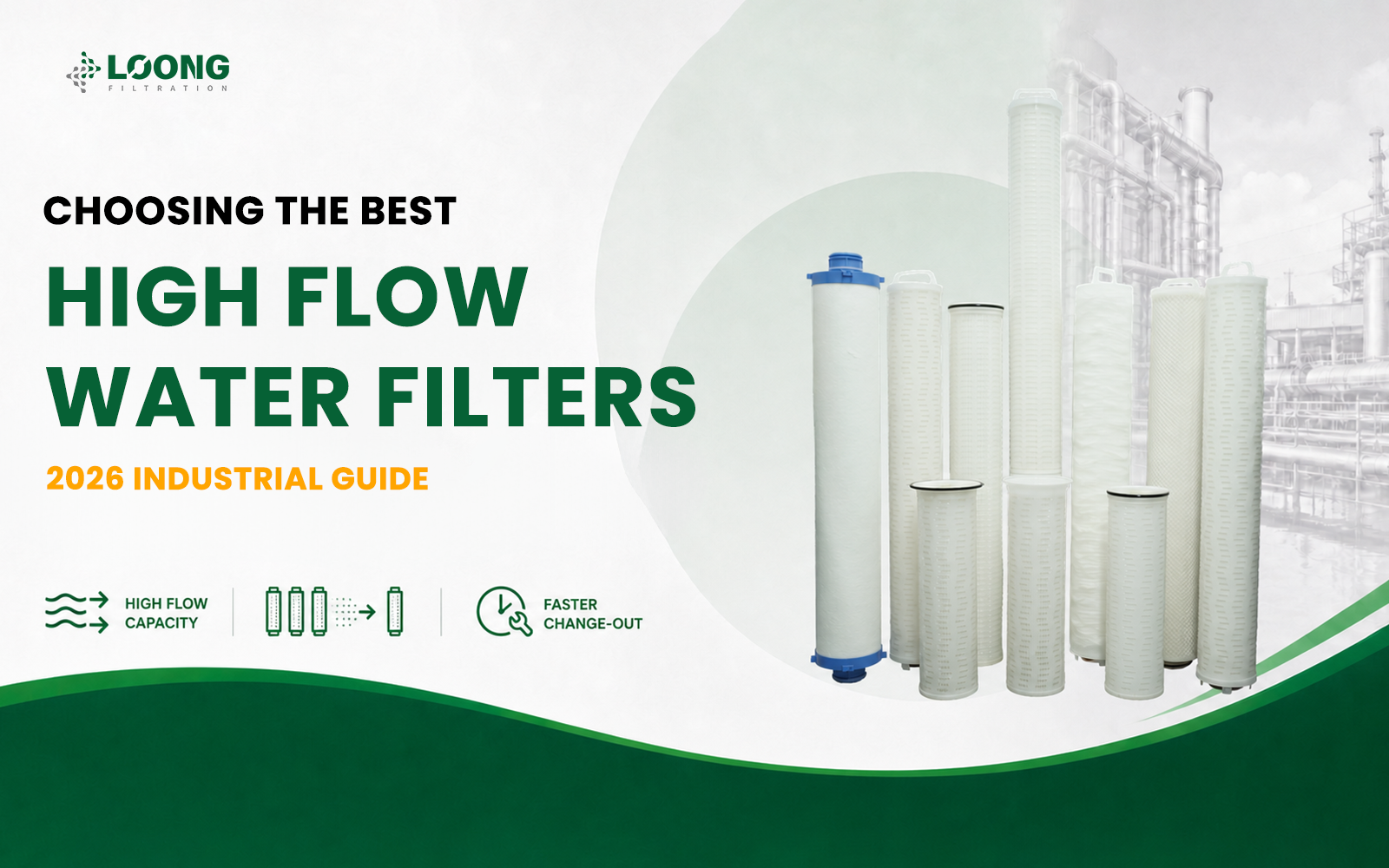 The best high flow filter is not simply the cartridge with the largest diameter or the highest published flow figure.
 -
 Customer Challenge and Filtration RequirementsHoney is a natural food product with excellent nutritional value and a unique flavor profile. However, maintaining a consistent appearance after packaging can be challenging, especially when bulk honey is transferred into smaller retail bottles.A honey p
 -
 To tackle post-settling clarity and microbial stability challenges, LOONG Filtration designed a 3,000 L/h, 6-stage progressive wine filtration system for Quinta da Lagoa Velha. Ranging from 5 μm coarse bag filtration and 3D lenticular depth clarification to integrated hot water SIP and 0.22 μm absolute PES terminal membrane cartridges, this staged architecture protects high-precision filters, ensures sterile bottling security, and preserves the wine's original sensory characteristics.
 -
 Replacing traditional, high-maintenance centrifugal separators with LOONG Filtration’s Sanitary Stainless Steel Candle Backwash Filters represents a major shift toward high efficiency and low OPEX in modern dairy processing. By replacing energy-intensive rotating bowls with static pressure-driven filtration, dairy plants can achieve up to 90% energy savings while maintaining pristine milk quality without stripping essential proteins or fats. Fully integrated with standard dairy CIP systems, LOONG’s robust 20-micron SS316L sintered mesh cartridges offer continuous, automated operation with zero product waste.


